Packaging is one of the most critical aspects of packers and movers services, logistics, and transportation. Proper packaging ensures that goods remain safe, damage-free, and well-organised during storage and transit. Whether it is house shifting, office relocation, car and bike transport service, or courier and parcel delivery, choosing the right packaging material directly impacts the safety of goods and customer satisfaction.
Professional packing and moving companies use a variety of packaging materials based on the type, weight, and fragility of items. In this blog, we will explain the 12 major types of packaging materials, their uses, and why they are essential in modern logistics and relocation services.
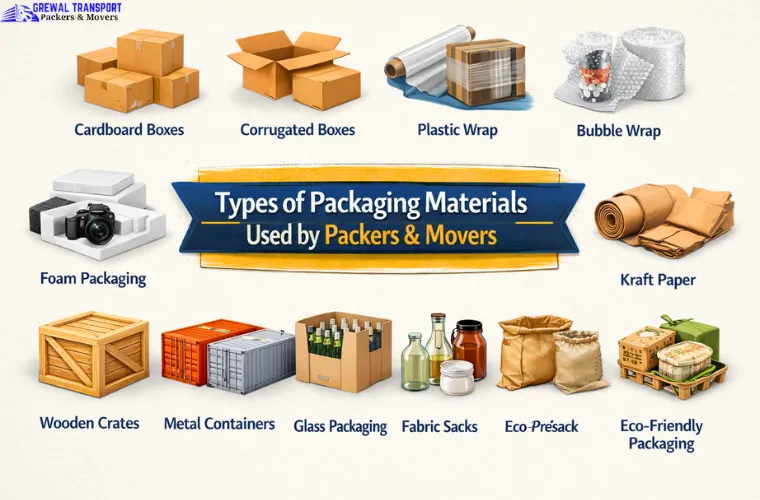
1. Cardboard Boxes
Cardboard boxes are among the most widely used packaging materials in packers and movers services. They are lightweight, affordable, and available in multiple sizes, making them suitable for packing household items.
Items such as clothes, books, toys, kitchenware, and documents are commonly packed in cardboard boxes during house shifting services. These boxes are easy to label, stack, and transport, which helps in organised relocation and faster unloading.
2. Corrugated Boxes
Corrugated boxes are stronger and more durable than standard cardboard boxes. They are specially designed for logistics services, goods transport, and long-distance relocation.
Corrugated packaging provides excellent protection against vibration, impact, and external pressure. Because of their strength, they are commonly used for packing electronics, appliances, fragile items, and office equipment during office shifting and intercity relocation services.
3. Plastic Packaging Materials
Plastic packaging materials include stretch wrap, shrink wrap, plastic sheets, and poly covers. These materials are highly resistant to moisture, dust, and water.
In packing and moving services, plastic wraps are used to cover furniture, sofas, mattresses, and electrical appliances. Plastic packaging is also widely used in warehouse storage and courier services to protect goods from environmental damage.
4. Bubble Wrap
Bubble wrap is one of the most critical protective packaging materials used by professional packers and movers. It contains air-filled bubbles that absorb shock and prevent damage.
Bubble wrap is ideal for packing fragile items such as glassware, crockery, mirrors, electronics, and decorative products. During house shifting and office relocation, bubble wrap significantly reduces the risk of breakage and scratches.
5. Foam Packaging
Foam packaging materials include thermocol (EPS), polyurethane foam, and polyethene foam. These materials offer excellent cushioning and insulation.
Foam packaging is commonly used in logistics and transportation services for packing electronics, machinery parts, and high-value items. It protects goods from impact, pressure, and temperature changes during long-distance movement.
6. Paper and Kraft Paper Packaging
Paper packaging, especially kraft paper, is widely used in eco-friendly packing solutions. It is biodegradable, recyclable, and cost-effective.
Professional packers and movers use kraft paper to wrap furniture, wooden items, utensils, and appliances. It protects surfaces from scratches, dust, and minor damage during relocation and storage.
7. Wooden Packaging
Wooden packaging includes wooden crates, pallets, and boxes. It is mainly used for heavy goods transport, industrial equipment, and export shipments.
Wooden packaging provides maximum strength and stability, making it ideal for international relocation, cargo services, and machinery transportation. Properly treated wooden crates also meet export and shipping safety standards.
8. Metal Packaging
Metal packaging includes containers made from aluminium and steel. These materials offer high durability and protection against moisture, light, and contamination.
Metal packaging is commonly used in industrial logistics, chemical transportation, and food packaging. Although it is not widely used in household shifting, it plays a crucial role in specialised transportation services.
9. Glass Packaging
Glass packaging is widely used in the food, beverage, pharmaceutical, and cosmetic industries. It is non-reactive and preserves product quality.
Due to its fragile nature, glass packaging requires extra protection, such as bubble wrap, foam, and corrugated boxes, during transport services and courier delivery. Proper packaging is essential to prevent breakage during transit.
10. Flexible Packaging
Flexible packaging includes pouches, laminated films, plastic wraps, and composite materials. It is lightweight and space-efficient.
This type of packaging is commonly used in e-commerce logistics and retail packaging. Flexible packaging helps reduce transportation costs while ensuring product safety.
11. Fabric Packaging
Fabric packaging includes jute bags, cotton bags, and woven polypropylene sacks. These materials are widely used for bulk goods, agricultural products, and storage purposes.
Fabric packaging is reusable, breathable, and environmentally friendly. It is commonly used in goods transport services and warehouse storage solutions.
12. Biodegradable and Eco-Friendly Packaging
With increasing awareness about sustainability, eco-friendly packaging materials are becoming popular in the packing and moving industry.
Biodegradable packaging includes moulded pulp, paper-based packaging, and plant-based plastics. Many professional packing and moving companies now use eco-friendly materials to reduce environmental impact and meet customer expectations.
Importance of Packaging Materials in Packers and Movers Services
The success of any relocation or logistics service depends heavily on the quality of packaging. Using the right packaging materials ensures the safety of goods, reduces damage, and enhances customer trust.
Professional packers and movers, courier companies, and transport services carefully select packaging materials based on item type, distance, weight, and handling requirements. Proper packaging ensures smooth house shifting, office relocation, vehicle transport, and goods transportation.
Conclusion
Packaging materials play a critical role in safe and efficient logistics operations. From cardboard boxes and bubble wrap to wooden crates and biodegradable packaging, each material serves a specific purpose.
Understanding these 12 major types of packaging materials helps individuals and businesses make informed decisions for packing and moving services, logistics, and transportation needs. Investing in high-quality packaging ensures damage-free delivery, cost efficiency, and customer satisfaction.
Frequently Asked Questions
1 Why are packaging materials essential in packers and movers services?
Packaging materials protect goods from damage during loading, transportation, and unloading, ensuring safe and hassle-free relocation.
2 Which packaging material is best for fragile items?
Bubble wrap and foam packaging are best for fragile items like glassware, electronics, and crockery due to their shock-absorbing properties.
3 What packaging materials are used for long-distance relocation?
Corrugated boxes, bubble wrap, foam, plastic wraps, and wooden crates are commonly used for long-distance and intercity relocation.
4 Are eco-friendly packaging materials reliable?
Yes, eco-friendly packaging materials like kraft paper and moulded pulp are reliable and provide good protection while being environmentally sustainable.
5 What packaging is used for furniture during house shifting?
Furniture is usually wrapped with plastic sheets, bubble wrap, and kraft paper to protect it from scratches, dust, and moisture.
6 Do professional packers and movers provide packaging materials?
Yes, professional packing and moving companies provide high-quality packaging materials as part of their relocation services.